|
Ah yes, the ubiquitous Lockheed Martin F-16 Fighting Falcon.
What more needs to be said about the little jet that revolutionized the
light weight fighter concept? Given
the amount of information available in both print and on the web on the F-16,
I’ll dispense with the usual history and technical information and get
right to the meat of the project.
Overview and Construction
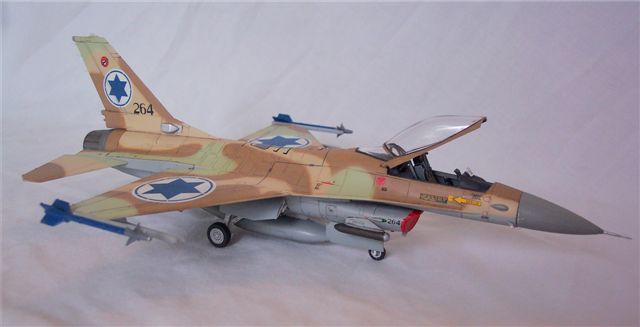
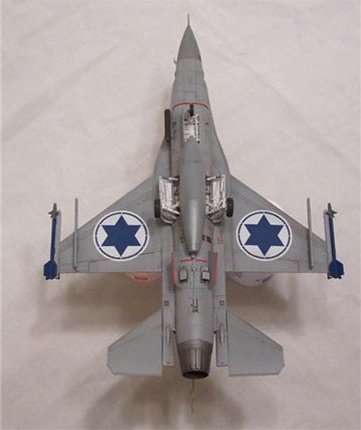
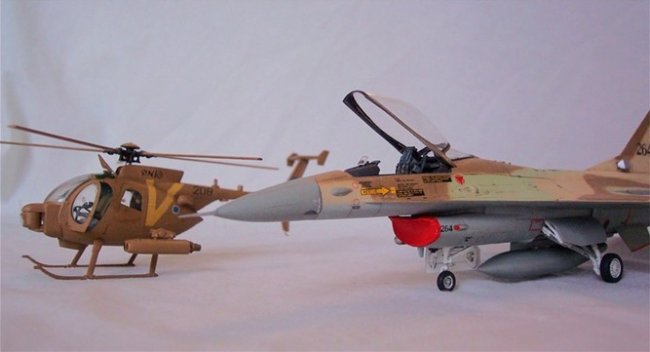
This is Monogram/Revell’s 1/72 F-16C, converted into an earlier
F-16A Netz of the Israeli Air Force. For
a more in-depth look, see Mike O’Hare’s excellent in-box review article here
on ARC (in the Reviews section). At
first, I was going to build a replica of the plane flown by Ilan Ramon during
the infamous Osirik Raid. Instead,
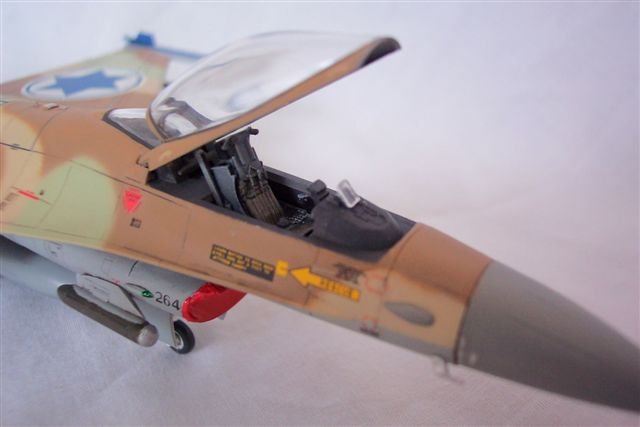
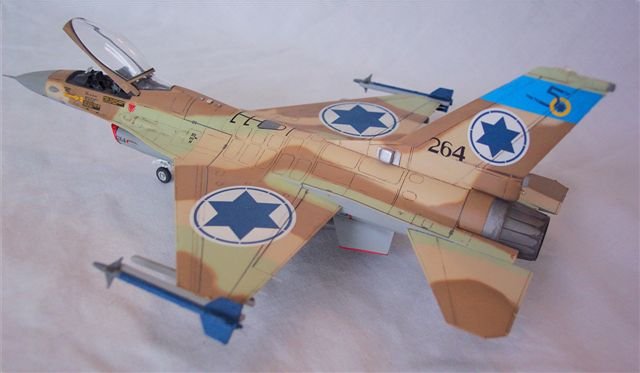
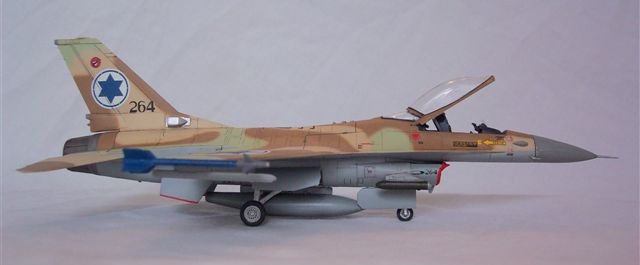
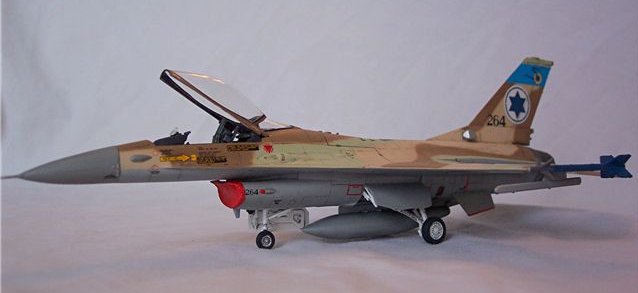
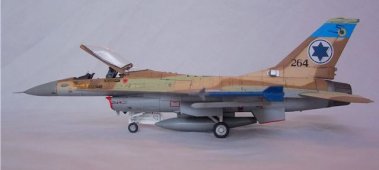
I settled on F-16A #264 of the Negev Squadron.
The oversize Star of David roundels and IAF 50th Anniversary tail band
make for an interesting and different looking IAF Viper.
The cockpit detail is very good, with a nicely molded cockpit tub and
instrument panel, separate throttle and control stick, and a decent ACES II
ejection seat.
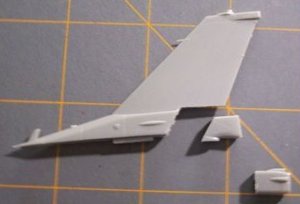
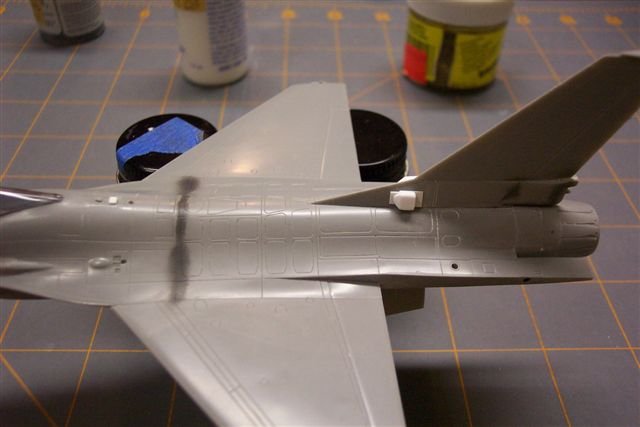
| The
base of the “A” tail was the only part that needed any modification
(all the other parts for the conversion are included in the kit), which
was achieved after some cutting and splicing using the back of the “C”
tail and a drag chute housing as donors.
Other modifications include: |
|
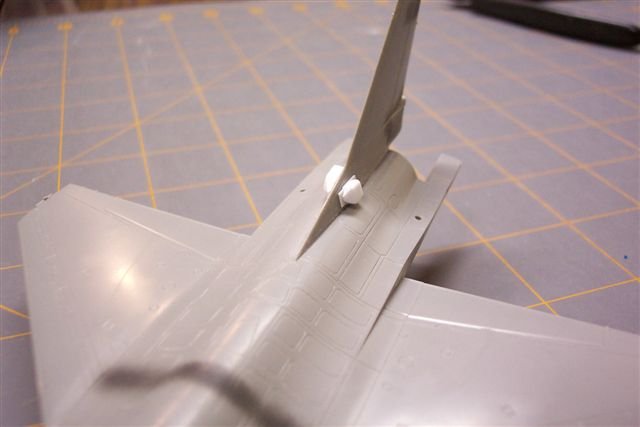
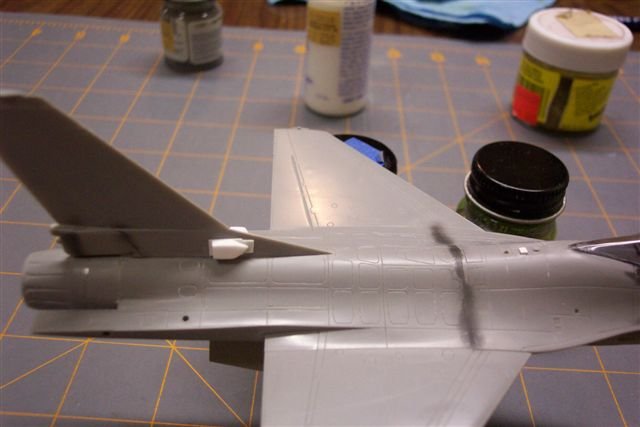
1.
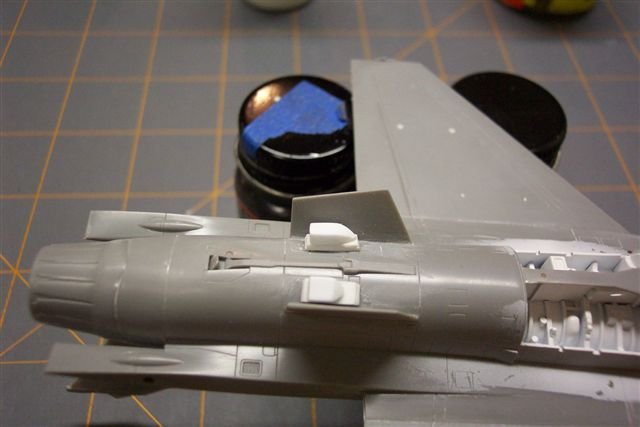
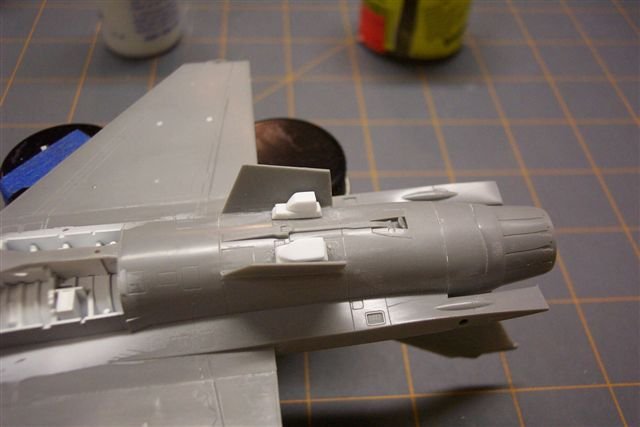
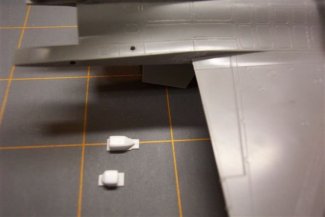
Adding external
chaff/flare dispensers to the base of the vertical stabilizer and between
the ventral fins (Peace Marble I Vipers only).
Thick sheet styrene was used to make the dispensers
2.
A GPS antenna was
added to the fuselage, between the upper Tacan antenna and formation/flood
light. Again, sheet styrene
was used to make the antenna.
3.
A threat warning
antenna was made from styrene, and then added under the air intake, ahead
of the front wheel well (behind the IFF/UHF antenna).
|
|
|
4.
The lower Tacan
antennas were removed, as these were deleted on Israeli F-16A/B’s.
5.
The position lights
on the side of the intake were fashioned from scrap styrene.
6.
A Pave Penny pod was added to the right side of the
intake (modified HARM pod and pylon from the kit). |
|
Click on
images below to see larger images
|
|

|
Aside from the above, the rest of the model was built out of the box.
The overall fit is good, though are a few spots that gave me trouble.
As is the case with most F-16 models, the intake has a wicked seam on the
inside (how I dealt with it is evident by the intake FOD coverJ).
The fit of the ventral fins is kind of rough, plus they kept breaking off
during construction because of the small attachment tabs. Now
onto my favorite part of modeling…
Painting
and Decaling
The model was painted in the standard IAF F-16 four color camouflage
scheme. Humbrol (Hu121 Pale Stone
matt) and Model Master (Dark Tan, RAF Sky type “S”, and Light Ghost Gray)
enamels were applied freehand using an Aztek A470 airbrush.
The radome and nose RHAW nose blisters are painted FS 36270 Neutral Gray
(Model Master). The panel lines
were accentuated with a thinner wash after a couple of coats of Future had been
applied and cured. The markings are
from Isradecal’s 1/72 F-16A/B decal set (IAF-15).
As stated earlier, I went with markings for Negev Squadron F-16 #264,
with the large Star of David roundels and IAF 50th Anniversary tail band.
The oversize roundels were applied to aid in identifying aircraft
participating in DACT exercises. As
usual, Isradecal’s markings are high quality and were no problem to apply.
After one final coat of Future, two coats of Model Master Acryl clear
flat was applied to tone everything down and give the finish a dull sheen.
Final
Construction and Conclusions
With the finish complete, it was time to add all the small bits.
The landing gear were kind of fiddly to assemble and add to the model
(admittedly, I’m used to 1/48 scale, so my fat fingers may have had more to do
with this than the fit itself). Two
inert sidewinders were added to the wingtips, a Pave Penny pod added to the
intake (along with a reshaped IFF/UHF antenna below), and the canopy tacked into
place. A piece of clear sprue was
added to the tip of the tail to represent the anti-collision light.
To make the FOD cover, I used Daniel Butcher’s foil method (found on
the Tools-n-Tips page). For the
final touch, AOA probes were added to the radome, and static dischargers to the
trailing edge of the wing, stabilators, and vertical stabilizer (all made with
stretched sprue).
References:
F-16
A/B Netz, by Yoav
Efrati and Ra’anan Weiss; Isradecal Publications
Walk
Around: F-16 Fighting Falcon,
by Lou Drendel; Squadron Signal Publications
F-16
Fighting Falcon in Action,
by Lou Drendel; Squadron Signal Publications
Albert
|
Click on
images below to see larger images
|
|
 |
|
|